
Knoxville Crawl Space Water
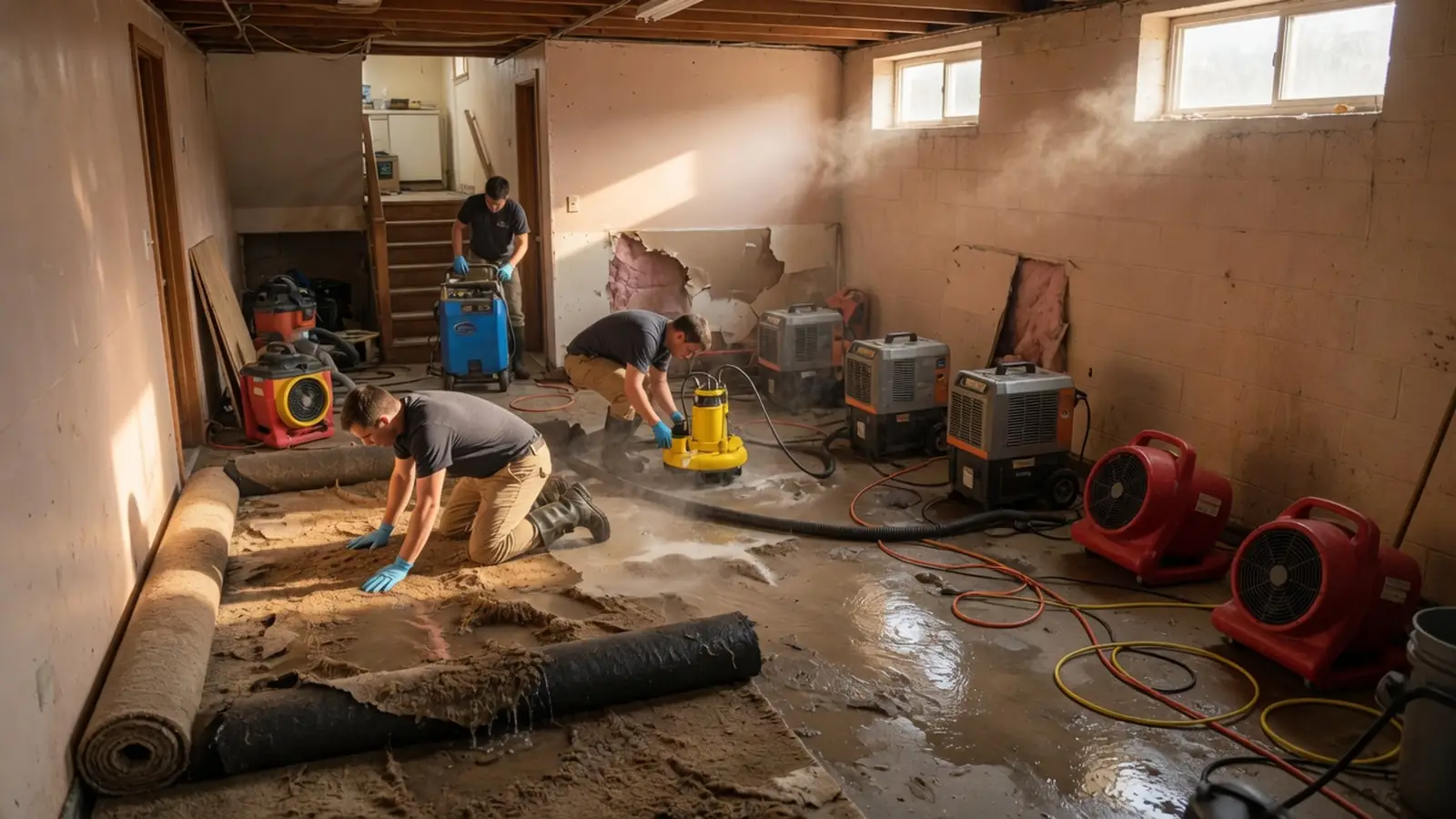
When storm runoff floods foundation trenches, our rapid extraction team pumps out standing water, eliminates moisture pockets, and protects subfloor framing. Persistent dampness and pooling water in crawl spaces compromise whole-home indoor air quality and decay structural framing over time. We deploy heavy industrial air movers and desiccant drying systems to stabilize humidity and protect your building structure.
Prefer to talk? (865) 555-0128
Dedicated Subfloor Water Remediation
Our technicians specialize in pumping out standing subfloor water, drying structural framing, and stabilizing humidity under residential foundations.
The regional hilly ridge-and-valley topography channels rapid storm runoff directly against foundation walls, frequently flooding low-side crawl space vents during heavy downpours.
Because the median owner-occupied home locally was built in 1973 (Census ACS 5-year), aging subfloors and timber supports require careful moisture evaluation after every rain event.
Our service territory counts 94,129 housing units on record in the Census ACS 5-year estimates.
About 17% of housing units (16,159 of 94,129) were built since 2000, so a substantial share of the local stock is still on its original systems.
Homeowners often describe how chronic standing water on dirt crawlspace floors drives homeowners to seek interior perimeter French drains, sump basins, and sealed vapor barriers before framing rots.
To safeguard structural timbers against saturation, property owners regularly schedule our thorough water damage restoration process to remediate subfloor pooling.
Every project concludes with precision moisture meter readings, digital thermal imaging, and complete job-site decontamination.
How We Resolve Crawl Space Water Intrusion
Substantial standing water submerging crawlspaces following severe weather leaves homeowners unsure whether immediate emergency extraction is required, which is why our crews mobilize industrial pumps quickly and help property owners manage severe basement flooding emergencies before water wicks into finished living areas.
- Emergency Water Pumping And Sludge Extraction. Heavy rainfall causes standing water to pool in low-clearance crawlspaces, requiring sump pump installation and exterior drainage solutions to eliminate high-volume subfloor flooding before structural saturation deepens.
- Saturated Insulation And Debris Removal. Technicians clear away waterlogged fiberglass insulation, organic debris, and standing silt to expose bare framing for thorough thermal inspection.
- Subfloor Drying And Ground Soil Extraction. Standing crawl space water must be extracted and ground soil dried before installing heavy vapor barrier liners, otherwise trapped subsoil moisture accelerates floor joist rot.
- Antimicrobial Sanitization And Structural Monitoring. Because uncontrolled crawl space moisture and musty odors create breeding conditions that attract pests while causing slow rot in structural wood, our specialists treat all exposed joists with EPA-registered botanical antimicrobials.
Our Subfloor Protection Standard
A pattern echoed in public discussions is that excessive ground moisture and high humidity force homeowners to decide between full crawlspace encapsulation and commercial dehumidifier systems to stabilize their subfloor climate. We uphold rigorous drying standards on every callout, tracking moisture content in subfloor timbers with calibrated pinless meters until structural materials reach equilibrium. If unaddressed dampness has already allowed microbial colonies to take hold on floor joists, learn how our technicians perform certified mold remediation to restore clean air throughout the structure. We leave every job site clean, safe, and fully documented.
Emergency Subfloor Water Pumping
When severe rainstorms flood crawl space trenches, our high-volume submersible extractors rapidly remove standing water. We clear standing liquid fast to prevent evaporative moisture from migrating up into subfloor framing. Our crews ensure complete water removal before deploying drying equipment.
Structural Joist And Subfloor Dehumidification
Saturated floor joists and subfloors require continuous commercial airflow and moisture extraction. We install commercial low-grain refrigerant dehumidifiers and axial fans to pull bound moisture directly out of damp wood. Digital moisture meters verify that timbers return to safe equilibrium levels.
Crawl Space Soil Drying And Sanitization
Damp earth beneath a home continually releases humidity into upper living levels if left untreated. We dry exposed ground surfaces, remove contaminated vapor retarders, and apply botanical antimicrobials across framing. This treatment halts microbial colonization and eliminates sour, musty crawl space odors.
Our Standards For Crawl Space Moisture Control
Every crawl space moisture emergency receives our complete technical focus, disciplined diagnostic testing, and thorough drying procedures. We inspect every corner of your foundation, identify water entry pathways, and deploy specialized industrial drying gear to protect your home's structural framing. You can expect honest evaluations, polite crews, and comprehensive drying documentation from initial extraction to final sign-off.
- 16Zip Codes Served
- 4Service Areas
- 3Services Offered
Local property owners rely on our moisture mitigation specialists when unexpected ground water floods their crawl spaces. Here is what area homeowners say about our prompt extraction, clear communication, and dedicated subfloor care.
“I already recommended them to my next-door neighbor after they pumped out three feet of standing storm water from beneath our house. The team showed up with heavy-duty extraction gear within hours and completely saved our hardwood flooring. You could not ask for better communication or faster response when your foundation is flooded.”
Marcus B.
“A prior waterproofing company laid plastic directly over muddy standing water last autumn, which ended up trapping moisture and causing severe mold along our floor joists. These guys came in, pulled out the ruined barrier, dried the subsoil completely, and treated every beam with antimicrobial spray. The difference in subfloor air quality is night and day now.”
Elena G.
“Their initial written quote spelled out every cost for subfloor pumping, wet insulation haul-away, and commercial dehumidifier rental down to the penny. The crew completed the entire dryout on schedule and the final invoice matched our original estimate without a single hidden charge. Having that financial transparency during a home emergency gave us complete peace of mind.”
Darren T.
“Every afternoon before packing up, the crew vacuumed the access walkway, rolled up their commercial hoses, and sealed the crawl space hatch tight. They never tracked mud or silt into our yard and kept our driveway completely clear throughout the four days of drying. It is rare to see tradespeople treat a customer's property with that level of respect.”
Hannah V.
Frequently Asked Questions
Should crawl space vents be sealed shut or left open to prevent moisture damage during humid East Tennessee summers?
Crawl space vents should be sealed shut during humid East Tennessee summers because open vents draw in hot air that condenses on cold floor joists. Warm outdoor air carries heavy humidity that hits cooler subfloor framing beneath air-conditioned rooms, creating rapid condensation and wood rot. Sealing vents alongside mechanical dehumidification maintains controlled subfloor moisture levels.
How fast does standing water in a crawl space cause structural damage?
Standing crawl space water can compromise indoor air quality and begin decaying wooden floor joists within twenty-four to forty-eight hours. Persistent subfloor pooling allows fungal spores to germinate on moist lumber while humidity wicks upward into subflooring and living spaces.
What is the typical cost to pump out and dry a flooded crawl space?
Crawl space water pumping and structural drying typically costs between fifteen hundred and four thousand dollars depending on water depth. Final costs depend on the volume of standing water, accessibility of the foundation, contaminated mud removal, and total commercial dehumidifier run time.
Does homeowner insurance cover crawl space water removal?
Home insurance usually covers sudden internal pipe bursts but excludes surface groundwater seepage unless you carry a separate flood policy. We document all moisture levels, source pathways, and structural damage with psychrometric logs and photos to support your carrier claim.
How long does it take to completely dry a soaked crawl space?
Complete crawl space drying generally takes three to five days using industrial low-grain refrigerant dehumidifiers and targeted axial air movers. Drying times vary based on timber saturation, subsoil wetness, foundation ventilation, and outdoor ambient weather conditions.