
Knoxville Basement Flooding
Basements suffer recurring water intrusion and floor pooling after rainstorms, necessitating root-cause drainage and waterproofing solutions. Sump pump malfunctions cause extensive flooding across finished basements, requiring urgent water extraction, drywall tear-out, and mold prevention. Our rapid-response technicians arrive promptly to stabilize your property and eliminate moisture risks.
Call (865) 555-0128 if water is flowing now.
Prefer to talk? (865) 555-0128
Dedicated Basement Flood Recovery
Discover how our water damage restoration protocol protects local properties during catastrophic seasonal flooding events.
Basement dampness and standing water following heavy rains trigger progressive mold outbreaks and compromise structural integrity over time.
A pattern echoed in public discussions is that past plumbing or roof leaks lead to suspected indoor mold growth, prompting homeowners to seek independent testing before committing to remediation.
Properties situated across local ridge terrain face intense hydrostatic pressure against foundation walls due to dense regional clay soils.
Our certified technicians inspect perimeter footings and subfloor cavities immediately upon arrival to halt ongoing contamination.
Our Basement Recovery Process
We follow a rigorous recovery protocol that addresses subterranean pooling, similar to how we resolve standing crawl space water in affected structures.
- Emergency Extraction And Containment. Containment barriers are necessary during drywall and baseboard tear-out to isolate airborne debris and prevent cross-contamination. High-volume pumps swiftly eliminate pooled floodwater from the lowest architectural points of your foundation.
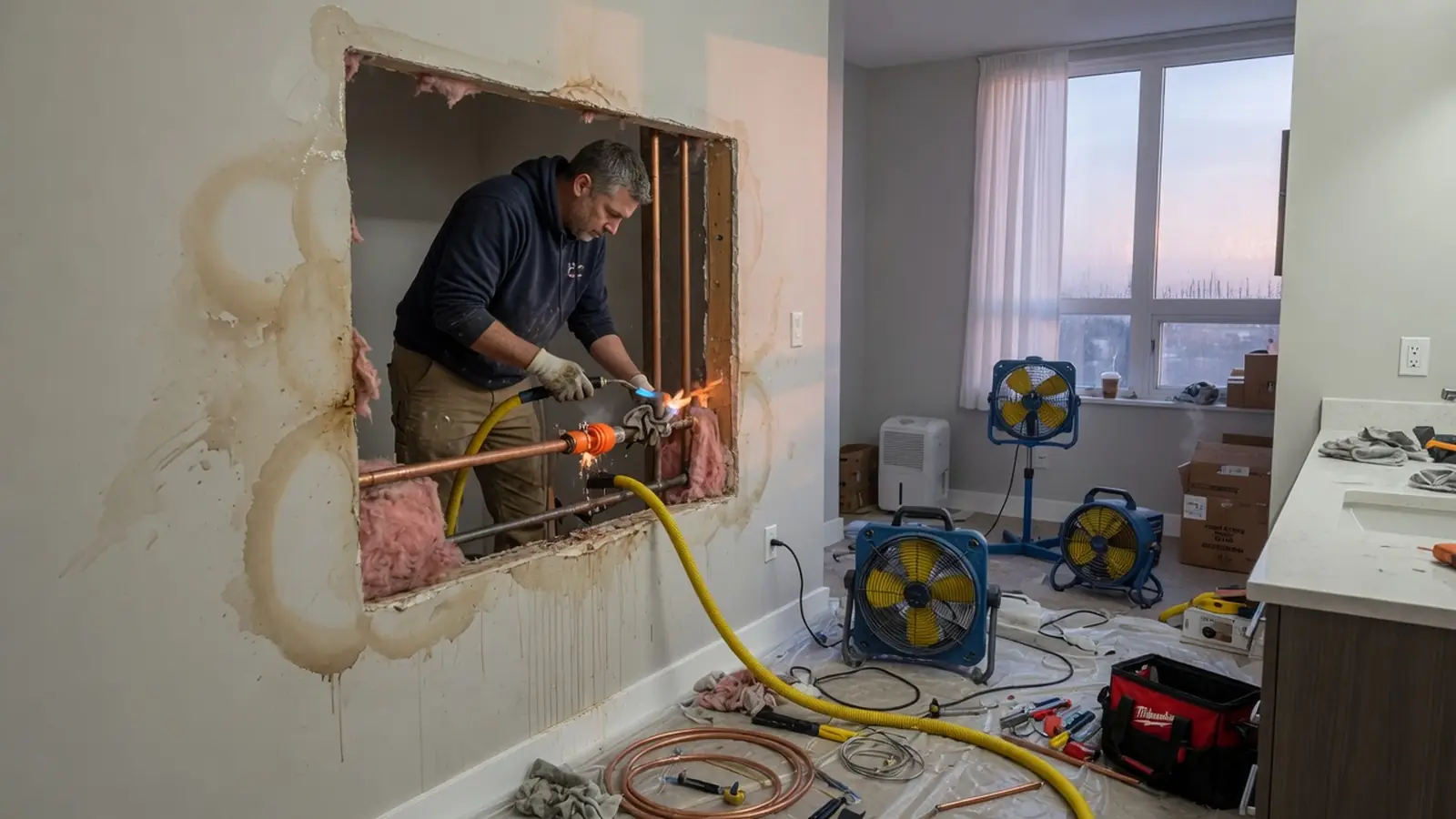
- Flood Cuts And Demolition. Restoration crews execute flood cuts twelve to twenty-four inches above the visible water line to extract saturated insulation and air-dry hidden wall framing cavities. Removing damaged porous drywall stops microbial spread across building studs.
- Flooring And Subfloor Removal. Basement drain backups often force water beneath finished flooring, necessitating complete tile and baseboard removal to reach saturated materials. Technicians scrape concrete slabs clean to prepare them for deep industrial decontamination.
- Deep Structural Drying And Monitoring. Moisture meters must check behind walls and ceilings because trapped water remains hidden and causes mold growth long after surface cleanup. Industrial air movers and LGR dehumidifiers run continuously until equilibrium moisture content is restored.
Complete Structural Protection
Every recovery project adheres to strict IICRC standards for professional water mitigation. If severe moisture triggers fungal contamination, find out more about fungal decontamination that restores indoor air quality. We never cut corners or leave damp structural pockets behind.
Submerged Sump Pump Extraction
Rapid elimination of standing water caused by mechanical pump failure or heavy inundation. We deploy high-capacity truck-mounted extractors to evacuate pooling liquid immediately.
Drain Backup Sanitization
Comprehensive clearing and decontamination when floor drains back up into finished living areas. Crews extract contaminated greywater, strip ruined trim, and apply hospital-grade antimicrobials.
Cavity Structural Drying
Targeted drying of wall cavities, subfloors, and framing using focused airflow systems. We run commercial dehumidification units to return moisture content to safe baseline levels.
Reliable Moisture Extraction Standards
We bring rapid extraction machinery, specialized meters, and structured containment methods to every flooded property. Our objective is thorough structural stabilization that protects indoor safety and halts continuous structural decay.
- 16Zip Codes Served
- 6Service Areas
- 3Services Offered
Local homeowners rely on our rapid response and disciplined moisture control when seasonal storms overwhelm below-grade living spaces. Here is how real property owners describe our service.
“Our original remediation contractor left soaking carpet padding underneath the baseboards and dust all over our furniture. The crew stepped in, isolated the whole basement with containment plastic, and stripped the hidden wet materials properly. They completely reversed the mess the previous outfit created.”
Marcus B.
“Getting a straight answer on mitigation costs seemed impossible until I called this company after our sump failure. The team handed me a comprehensive written quote before cutting into the drywall and stuck to the initial estimate without a single hidden surcharge. That level of financial clarity made a terrifying flood manageable.”
Elena G.
“Every evening before heading home, these guys vacuumed the stairs, packed their cords neatly, and sealed the plastic air barriers tight. You would never have guessed our basement was an active demolition zone from looking at the rest of the house. Coming down each night to an organized workspace took away so much stress.”
Trevor D.
“Regular photo messages and moisture meter readings arrived on my phone every afternoon without me ever having to ask. The crew kept me in the loop on framing dryness levels and exactly when the equipment was scheduled to be pulled. Never once did I have to chase down a supervisor for an update.”
Hannah S.
Frequently Asked Questions
Is a battery-backup sump pump necessary to keep my basement dry if severe thunderstorms knock out local grid power?
A battery backup pump is vital during severe storms because power outages disable primary pumps right when runoff volume reaches its peak. Secondary auxiliary units activate automatically when the main power feed trips, maintaining pit evacuation and preventing basin overflows.
Why do technicians execute flood cuts above the visible water line?
Crews make flood cuts twelve to twenty-four inches above wet lines to remove soaked insulation and ventilate hidden wall framing. Porosity causes sheetrock to draw liquid upward like a wick, requiring elevated cuts to access concealed studs and prevent mold.
Why is surface cleaning alone insufficient after basement flooding?
Moisture meters must check behind walls and ceilings because trapped water remains hidden and causes mold growth long after surface cleanup. Moisture migrates behind base plates and into sill lumber, where stagnant pockets sustain microbial expansion unless actively dried.
How does contaminated drain backup water affect finished flooring?
Basement drain backups often force water beneath finished flooring, necessitating complete tile and baseboard removal to reach saturated materials. Wastewater deposits pathogens underneath adhesive layers and floating planks, making total removal mandatory to decontaminate concrete foundations.
How quickly does mold develop inside a damp basement after rain?
Mold colonies typically begin propagating within twenty-four to forty-eight hours on wet building materials exposed to elevated humidity. Basement dampness and standing water following heavy rains trigger progressive mold outbreaks and compromise structural integrity over time.